Understanding L-Tryptophan’s Role in Canine Health
L-tryptophan, an essential amino acid, has emerged as a significant nutritional supplement in canine health management. This versatile compound serves as a crucial precursor to several biochemical pathways that influence neurological function, behaviour, immune regulation, and overall wellbeing. This comprehensive guide explores the scientific evidence, biochemical mechanisms, and therapeutic applications of L-tryptophan in canine health management.
Summary
L-tryptophan is an essential amino acid that dogs cannot synthesise independently, requiring dietary acquisition. It serves as the biochemical precursor to serotonin (5-hydroxytryptamine) and melatonin, two critical neurotransmitters that regulate mood, behaviour, sleep patterns, and various physiological functions. Modern research has validated L-tryptophan’s effectiveness in supporting canine behavioural health, stress management, and sleep regulation, with additional benefits for immune function and digestive health. This article provides detailed information about L-tryptophan’s benefits, mechanisms of action, dietary sources, and proper supplementation guidelines for dogs.
Key Takeaways
- Essential amino acid that must be obtained through diet
- Serves as precursor to serotonin and melatonin
- Demonstrates effectiveness for anxiety and stress management
- Supports sleep regulation and circadian rhythms
- Provides immunomodulatory benefits
- Contributes to gastrointestinal homeostasis
- Requires proper dosing and administration for optimal results
- Generally safe with minimal side effects when properly administered
Table of Contents
Understanding L-Tryptophan’s Role in Canine Health
- Summary
- Key Takeaways
Biochemical Pathways and Metabolism
- Primary Metabolic Pathways
- Serotonin Synthesis Pathway
- Melatonin Production Pathway
- Kynurenine Pathway
- Neurological and Behavioural Pathways
- Serotonin-Mediated Effects
- Melatonin-Based Regulation
- Immune System Modulation
- Kynurenine Pathway Immunoregulation
- Gut-Brain Axis Influence
Health Benefits and Applications
- Behavioural Health Support
- Anxiety Management
- Aggression Reduction
- Stress Resilience
- Sleep and Circadian Regulation
- Sleep Quality Improvement
- Geriatric Sleep Support
- Additional Physiological Benefits
- Gastrointestinal Support
- Immune Function
Dietary Sources of L-Tryptophan
- Natural Food Sources for Dogs
- Animal Protein Sources
- Plant-Based Sources
- Commercial Diets
- Dosage Recommendations
- Administration Strategies
- Supplement Forms
- Timing Considerations
Safety Considerations and Precautions
- Potential Side Effects
- Mild Effects
- Rare Concerns
- Contraindications
- Medical Conditions
- Medication Interactions
- Common Questions and Answers
What is L-Tryptophan?
L-tryptophan is one of the ten essential amino acids required by dogs that cannot be synthesised by the body and must be obtained through dietary sources. This aromatic amino acid is characterised by:
- Chemical structure containing an indole side chain
- Molecular formula C₁₁H₁₂N₂O₂
- Status as the least abundant essential amino acid in most proteins
- Role as the biosynthetic precursor to multiple critical compounds
- Unique ability to cross the blood-brain barrier
Biochemical Pathways and Metabolism
Primary Metabolic Pathways
- Serotonin Synthesis Pathway:
- L-tryptophan conversion to 5-hydroxytryptophan (5-HTP) via tryptophan hydroxylase
- 5-HTP conversion to 5-hydroxytryptamine (serotonin) via aromatic L-amino acid decarboxylase
- Requires vitamin B6 (pyridoxine) as co-factor
- Rate-limited by tryptophan availability in the brain
- Influenced by competitive transport across the blood-brain barrier
- Melatonin Production Pathway:
- Serotonin conversion to N-acetylserotonin via N-acetyltransferase
- N-acetylserotonin conversion to melatonin via hydroxyindole-O-methyltransferase
- Regulated by circadian rhythms and light exposure
- Pineal gland serves as primary production site
- Influences sleep-wake cycles and seasonal physiological changes
- Kynurenine Pathway:
- Major metabolic route processing over 95% of tryptophan
- Initiated by indoleamine 2,3-dioxygenase (IDO) and tryptophan 2,3-dioxygenase (TDO)
- Produces immunomodulatory metabolites
- Generates NAD+ (nicotinamide adenine dinucleotide) as end product
- Regulated by inflammatory status and stress hormones
Mechanisms of Action
Neurological and Behavioural Pathways
- Serotonin-Mediated Effects:
- Modulation of mood and emotional regulation
- Anxiety reduction through 5-HT1A receptor activation
- Impulse control through prefrontal cortex serotonergic tone
- Aggression inhibition via serotonergic pathways
- Stress resilience enhancement
- Melatonin-Based Regulation:
- Synchronisation of sleep-wake cycles
- Establishment of circadian rhythm
- Promotion of sleep onset and maintenance
- Seasonal physiological adaptation
- Antioxidant neuroprotection
Immune System Modulation
- Kynurenine Pathway Immunoregulation:
- Production of immunomodulatory metabolites
- Regulation of T-cell activity
- Influence on inflammatory cytokine production
- Control of immune tolerance mechanisms
- Stress-induced immunomodulation
- Gut-Brain Axis Influence:
- Support for intestinal serotonin production (90% of body’s serotonin)
- Regulation of gastrointestinal motility
- Influence on gut microbiome composition
- Modulation of visceral sensitivity
- Enhancement of intestinal barrier integrity
Health Benefits and Applications
Behavioural Health Support
- Anxiety Management:
- Reduction of situational anxiety
- Decreased noise sensitivity
- Management of separation-related behaviours
- Improved response to environmental stressors
- Enhanced behavioural therapy outcomes
- Aggression Reduction:
- Decreased territorial aggression
- Modulation of fear-based aggressive responses
- Improved impulse control
- Enhanced threshold for reactive behaviours
- Support for behavioural modification programmes
- Stress Resilience:
- Better adaptation to environmental changes
- Improved coping with transient stressors
- Decreased stress-related behaviours
- Reduced physiological stress markers
- Enhanced behavioural stability
Sleep and Circadian Regulation
- Sleep Quality Improvement:
- Enhanced sleep continuity
- Reduced night-time disturbances
- Improved sleep latency (time to fall asleep)
- Better sleep architecture and REM patterns
- Adjustment to seasonal light changes
- Geriatric Sleep Support:
- Management of age-related sleep changes
- Reduction of cognitive dysfunction-related sleep disturbances
- Support for maintaining healthy sleep-wake cycles in senior dogs
- Improved daytime alertness through better night-time rest
- Enhanced quality of life in ageing dogs
Additional Physiological Benefits
- Gastrointestinal Support:
- Regulation of gut motility
- Modulation of visceral sensitivity
- Support for enterochromaffin cell function
- Influence on gut microbiota composition
- Management of functional gastrointestinal disorders
- Immune Function:
- Balanced inflammatory responses
- Enhanced stress-related immune resilience
- Modulation of allergic responses
- Optimisation of immune cell function
- Support during immune challenges
Dietary Sources of L-Tryptophan
Natural Food Sources for Dogs
- Animal Protein Sources:
- Turkey: 0.24-0.33g/100g
- Chicken: 0.21-0.29g/100g
- Salmon: 0.25-0.31g/100g
- Beef: 0.18-0.25g/100g
- Lamb: 0.17-0.23g/100g
- Eggs: 0.15-0.21g/100g
- Plant-Based Sources:
- Pumpkin seeds: 0.57g/100g
- Sesame seeds: 0.37g/100g
- Soya beans: 0.59g/100g
- Oats: 0.18g/100g
- Brown rice: 0.10g/100g
- Chickpeas: 0.14g/100g
- Commercial Diets:
- Premium protein-rich dog foods
- Prescription behavioural diets
- Senior-specific formulations
- Specialised anxiety-management diets
- Grain-inclusive balanced diets
Supplementation Guidelines
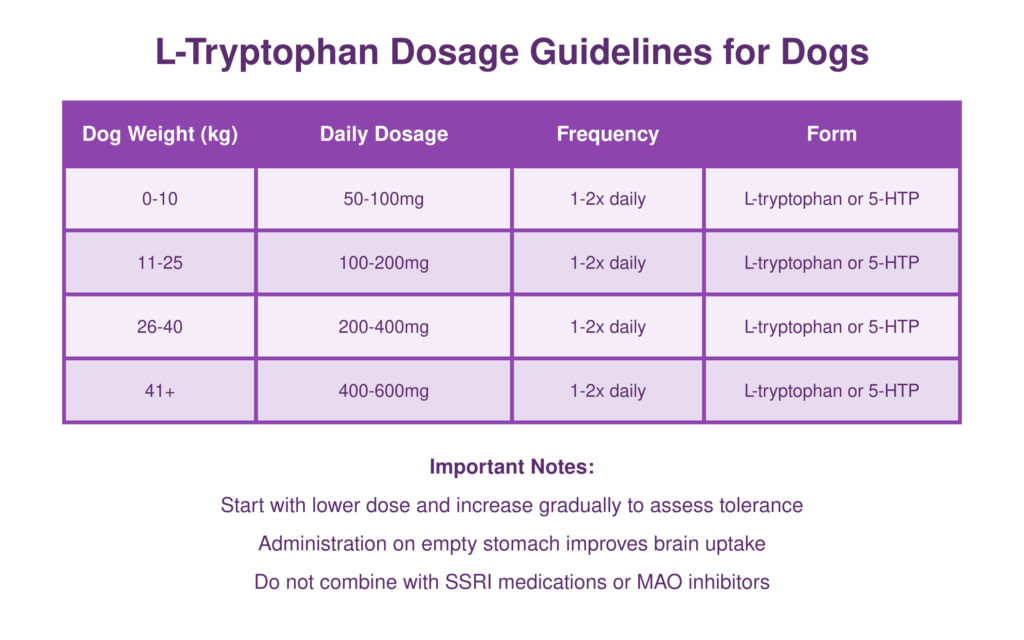
Dosage Recommendations
Administration Strategies
- Supplement Forms:
- Pure L-tryptophan powder
- L-tryptophan capsules
- 5-HTP supplements (more direct serotonin precursor)
- Combination supplements with co-factors (B6, magnesium)
- Chewable formulations for easier administration
- Timing Considerations:
- Administration on empty stomach improves brain uptake
- Evening dosing for sleep-related benefits
- Pre-stressor administration (60-90 minutes before)
- Consistent daily timing for behavioural issues
- Seasonal adjustment for light-sensitive dogs
Safety Considerations and Precautions
Potential Side Effects
- Mild Effects:
- Transient gastrointestinal upset
- Mild sedation or drowsiness
- Temporary changes in appetite
- Adaptational dizziness
- Initial changes in sleep patterns
- Rare Concerns:
- Serotonin syndrome (with certain medications)
- Allergic reactions in sensitive individuals
- Blood glucose fluctuations
- Urinary changes
- Individual sensitivity responses
Contraindications
- Medical Conditions:
- Dogs with certain liver disorders
- History of seizure disorders
- Compromised kidney function
- Diabetes mellitus (requires monitoring)
- Diagnosed malabsorption syndromes
- Medication Interactions:
- SSRI/SNRI medications
- MAO inhibitors
- Certain pain medications
- Specific antihistamines
- Some muscle relaxants
FAQ – L-Tryptophan for Dogs
L-tryptophan is an essential amino acid that dogs must obtain through their diet. It serves as a crucial building block for serotonin and melatonin, neurotransmitters that regulate mood, behaviour, and sleep cycles. In dogs, L-tryptophan helps by:
Supporting balanced mood and emotional regulation
Reducing anxiety and stress-related behaviours
Improving sleep quality and patterns
Enhancing focus and learning capacity
Supporting immune function through specialised metabolic pathways
The benefits are most pronounced in dogs experiencing situational anxiety, noise sensitivity, mild to moderate behavioural issues, or sleep disturbances.
L-tryptophan is generally safe for dogs when administered in appropriate amounts. As a naturally occurring amino acid present in many protein sources, it has a good safety profile. However, safety considerations include:
Proper Dosing:
Follow weight-based guidelines
Start with lower doses and increase gradually
Monitor individual response
Precautions:
Not suitable for dogs with certain liver conditions
May interact with specific medications (especially behaviour medications)
Should be used cautiously in pregnant or lactating dogs
May require veterinary supervision for dogs with pre-existing conditions
Most side effects, if they occur, are mild and transient, typically resolving with proper dosage adjustment.
The timeframe for observing effects varies depending on the condition being addressed:
For Situational Anxiety:
Acute effects: 60-90 minutes after administration
Optimal timing: Give before anticipated stressful events
For Ongoing Behavioural Issues:
Initial improvements: 1-2 weeks of consistent use
Maximum benefits: 4-6 weeks of regular administration
Consistent daily administration is key for behavioural benefits
For Sleep Regulation:
Sleep onset improvements: Often within 3-7 days
Full sleep cycle regulation: 2-3 weeks of regular evening dosing
Individual responses vary based on the dog’s metabolism, existing serotonin levels, and the specific issue being addressed.
L-tryptophan may help manage certain types of aggression in dogs, particularly those linked to anxiety, fear, or impulse control issues. The potential benefits include:
Improved impulse control through enhanced serotonergic function
Reduced reactivity to triggering stimuli
Decreased anxiety-based aggressive responses
Enhanced capacity for self-regulation
Support for professional behavioural modification programmes
However, it’s important to understand that:
L-tryptophan is not a complete solution for serious aggression
Professional behavioural assessment is essential
Results vary based on the underlying cause of aggression
Best results occur when combined with appropriate training
Some forms of aggression require more intensive interventions
For optimal results, L-tryptophan should be part of a comprehensive approach that includes behaviour modification, environmental management, and veterinary guidance.
Several foods contain significant amounts of L-tryptophan that can be safely incorporated into a dog’s diet:
Animal Protein Sources:
Turkey (particularly turkey breast): 0.24-0.33g/100g
Chicken: 0.21-0.29g/100g
Duck: 0.22-0.28g/100g
Fish (especially salmon and tuna): 0.25-0.31g/100g
Eggs: 0.15-0.21g/100g
Plant-Based Sources:
Pumpkin seeds: 0.57g/100g
Sesame seeds (in limited amounts): 0.37g/100g
Oats: 0.18g/100g
Chickpeas (properly cooked): 0.14g/100g
When incorporating these foods, ensure they are:
Prepared appropriately for dogs (cooked, unseasoned)
Introduced gradually into the diet
Given in appropriate portions
Free from harmful additives (no onion, garlic, excessive salt)
Part of a balanced dietary plan
For targeted therapeutic effects, supplementation may provide more precise dosing than food sources alone.
L-tryptophan offers a different approach to managing anxiety compared to prescription medications:
Mechanism Differences:
L-tryptophan: Serves as a precursor to serotonin, providing the building blocks for natural synthesis
Prescription medications: Often directly modulate neurotransmitter levels or receptor activity
Onset and Efficacy:
L-tryptophan: Typically more gradual effect with milder potency
Prescription medications: Often faster-acting with more pronounced effects
Safety Profile:
L-tryptophan: Generally fewer side effects, less potential for dependence
Prescription medications: May have more significant side effects and withdrawal concerns
Appropriate Applications:
L-tryptophan: Better suited for mild to moderate anxiety, situational stress
Prescription medications: May be necessary for severe anxiety, phobias, or panic disorders
Many veterinarians recommend trying L-tryptophan and other natural approaches before prescription medications for mild to moderate cases, or using them as complementary supports in more severe cases. The best approach depends on the individual dog’s needs and response.
Puppies can take L-tryptophan, but special considerations apply:
Safety for Puppies:
Generally safe when dosed appropriately for body weight
Start with the lower end of recommended dosages
Introduce gradually to monitor for any sensitivity
Developmental Considerations:
Puppies are undergoing critical neurological development
Serotonin plays important roles in brain development
Natural dietary sources may be preferable to supplements
Appropriate Applications:
Particularly useful for high-energy, easily aroused puppies
Can support sleep patterns during developmental phases
May help with transitions and environmental adaptations
Useful for puppies exhibiting early signs of anxiety
Always consult with a veterinarian before starting any supplement in puppies under 6 months of age, as their metabolism and needs differ from adult dogs.
L-tryptophan can have mild calming effects but typically doesn’t cause excessive sleepiness when properly dosed:
Effects on Alertness:
Promotes relaxation rather than sedation at standard doses
May enhance natural sleep patterns rather than forcing sleep
Generally doesn’t impair coordination or cognition
Dosage Factors:
Higher doses are more likely to produce drowsiness
Evening administration may support normal sleep onset
Morning administration typically produces calming without significant drowsiness
Individual Variation:
Some dogs are more sensitive and may show increased drowsiness
Initial administration may have stronger effects that moderate with continued use
Effects often balance out after 1-2 weeks of regular use
If excessive drowsiness occurs, reducing the dosage or adjusting the timing of administration usually resolves the issue.
L-tryptophan can be helpful for managing noise phobias related to fireworks, thunderstorms, and other loud noises:
Effectiveness for Noise Phobias:
Particularly useful for mild to moderate noise sensitivity
Can reduce physiological stress responses
Helps maintain cognitive function during frightening events
Supports other behavioural strategies
Optimal Administration:
Start supplementation 3-7 days before anticipated events (ideal)
Give 60-90 minutes before expected noise events
May combine with other calming supplements for enhanced effect
Continue during the entire noise-prone period (firework season, storm season)
Complementary Strategies:
Most effective when combined with behaviour modification
Enhanced by creating safe spaces and sound-dampening environments
Works well alongside other anxiety-reduction tools
May improve responsiveness to training and counterconditioning
For severe noise phobias, L-tryptophan is often part of a multi-modal approach that may include behavioural therapy and, in some cases, prescription medications.
Senior dogs often experience particular benefits from L-tryptophan supplementation:
Age-Related Benefits:
Support for cognitive function and brain health
Management of age-associated sleep changes
Reduction of anxiety related to sensory changes or cognitive decline
Support for immune system regulation in ageing dogs
Maintenance of gastrointestinal comfort and function
Special Considerations:
May need lower starting doses due to changed metabolism
Effects on sleep can be particularly beneficial for seniors with disturbed rest
Can complement other senior supplements like omega-3s and antioxidants
May require adjustment based on concurrent medications
Particular benefits for dogs showing early cognitive dysfunction
Senior dogs often show improvements in quality of life, engagement, and emotional regulation with appropriate L-tryptophan supplementation.
Conclusion
L-tryptophan represents a valuable nutritional supplement for supporting canine behavioural health, sleep regulation, and physiological wellbeing. This essential amino acid provides the biochemical building blocks for serotonin and melatonin production, influencing mood, behaviour, sleep patterns, and various physiological functions. Through multiple metabolic pathways, L-tryptophan offers a gentle yet effective approach to managing anxiety, stress reactions, and sleep disturbances in dogs, with additional benefits for immune and gastrointestinal function.
When properly administered at appropriate dosages, L-tryptophan provides a safe, natural option that can be used independently for mild issues or as part of comprehensive management strategies for more complex behavioural and physical health concerns. Success depends on proper dosing, consistent administration, and integration into holistic health management strategies. Always consult with a veterinarian before starting any supplement regimen, especially for dogs with existing health conditions or those on medication.