Summary
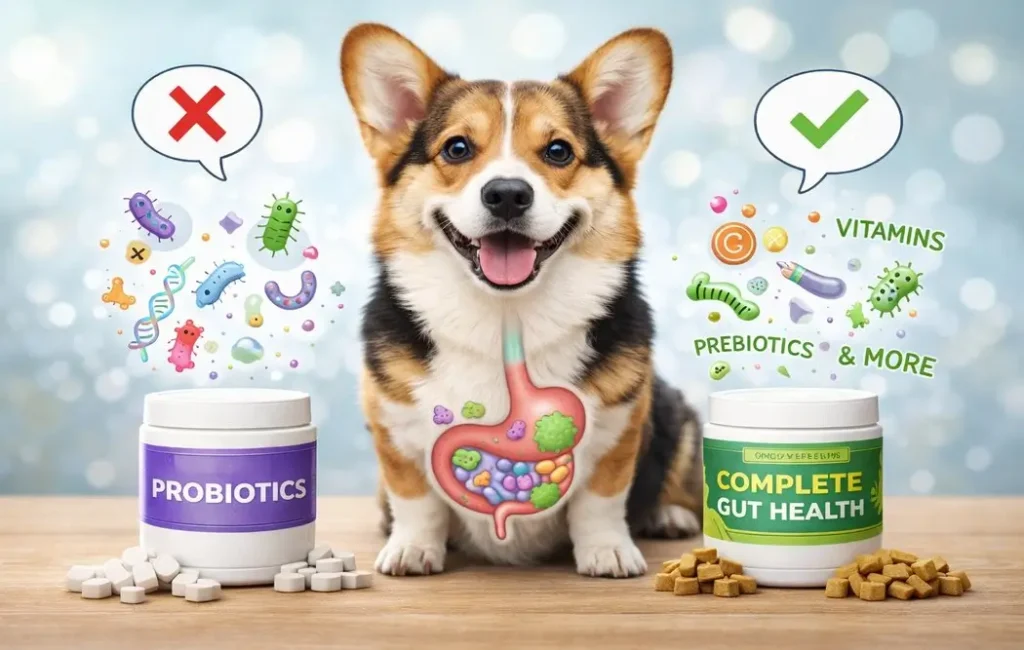
Search for gut health supplements for dogs and you will find a landscape dominated by probiotics. Single strains, broad claims, and broadly similar marketing language across dozens of products. What that landscape does not provide is an accurate picture of what canine gut health supplementation actually requires. The gut microbiome is not a probiotic deficiency. It is a complex ecosystem that requires three interdependent layers of nutritional support to function optimally: prebiotics to feed beneficial microbial communities, a rigorously selected probiotic strain to modulate them, and postbiotics to deliver measurable downstream physiological activity. This guide explains each layer, why none of them is sufficient without the others, and what that means for how every gut health supplement should be evaluated.
Introduction
The pet supplement aisle, in shops and online, has a probiotic problem. Not a shortage of them, but a surfeit of the word. Probiotics have become the dominant marketing language in canine gut health supplementation, appearing on labels ranging from a single low-dose Lactobacillus strain with no species-specific evidence to multi-component formulations with documented clinical activity. The word has done so much marketing work that it has largely stopped doing scientific work. Owners reading “supports gut health” on a probiotic product have no reliable way of knowing, from that language alone, whether what they are looking at is a clinically meaningful intervention or a category placeholder.
This matters because the gut microbiome is not a simple system that responds to a single input. It is the upstream influence on your dog’s immune function, digestive stability, neurological signalling, skin health, joint inflammation, metabolic regulation, and biological ageing. An ecosystem of that complexity requires a correspondingly complete nutritional framework. Probiotics are one component of that framework. They are not the whole of it.
What follows is an explanation of the three layers that effective gut health supplementation requires, why each layer is mechanistically necessary, and why the three together produce outcomes that none of them produces alone. It is also a practical framework for evaluating any supplement you encounter against the standard that the evidence actually supports.
Key Takeaways
- Effective gut health supplementation for dogs requires three interdependent layers: a prebiotic to feed beneficial microbial communities, a rigorously selected probiotic to modulate them, and postbiotics to deliver measurable downstream physiological activity.
- Prebiotics are not interchangeable with general dietary fibre. True prebiotics selectively feed beneficial bacterial communities and support short-chain fatty acid production. The source and fermentation profile matter.
- Probiotic selection requires strain-level identification, documented gastric acid resistance, a relevant CFU count, and ideally species-specific regulatory authorisation or clinical evidence in dogs. Genus-level labelling is not sufficient.
- Postbiotics are the most absent, and least understood, layer in the pet supplement category. They deliver immunomodulatory, gut-epithelial, and metabolic activity independently of live organism colonisation dynamics.
- The three layers are mechanistically interdependent. Prebiotics create the substrate environment for probiotic colonisation. Probiotics modulate the microbial community that generates postbiotic outputs. Postbiotics deliver the downstream effects the other two layers work to produce.
- Beyond the three-layer biotics foundation, targeted nutraceuticals can address specific gut-organ axis presentations including skin reactivity, digestive instability, anxiety, joint inflammation, and metabolic health.
- Evaluating a gut health supplement requires asking whether all three layers are present, named, and dosed at clinically relevant levels. Most category products meet none of these criteria fully.
In This Guide
- The Probiotic Shorthand Problem
- Why Gut Health Supplementation Is a Three-Layer System
- Layer 1: Prebiotics — Feeding the Microbiome, Not Just Adding to It
- Layer 2: Probiotics — Why Strain Specificity and Authorisation Matter
- Layer 3: Postbiotics — The Most Overlooked Component
- Why the Three Layers Are Interdependent
- Beyond the Biotics Foundation: Where Targeted Nutraceuticals Fit
- How Bonza Approaches Gut Health Supplementation
- How to Evaluate Any Gut Health Supplement
- FAQ
- Conclusion
- References
- Editorial Information
The Probiotic Shorthand Problem
The pattern is consistent enough to be structural. A dog owner searches for a gut health supplement, encounters a page of results built primarily around probiotic claims, selects a product on the basis that it contains a probiotic and that the marketing language sounds broadly appropriate, and pays little attention to which strain, at what dose, with what evidence, and with what other components alongside it. The category has trained owners to stop asking those questions by making all products sound roughly equivalent.
Probiotics earned their prominence in the gut health conversation legitimately. The evidence for specific strains in specific species at specific doses is real and growing. The problem is not that probiotics are in these products. The problem is that the category has reduced gut health supplementation to probiotic presence as a binary — either the supplement contains a probiotic or it does not — while the clinical picture is considerably more nuanced than that binary allows.
Strain identity matters because different strains of the same species have entirely different mechanisms, colonisation properties, gastric acid survival rates, and evidence profiles. A product labelled as containing Lactobacillus acidophilus tells you essentially nothing without the strain designation, CFU count, and evidence that the strain survives the gastric environment to reach the site of intended action. Dose matters because a probiotic at sub-therapeutic inclusion is not providing the benefit the label implies. Regulatory authorisation matters because it represents a level of species-specific safety and efficacy scrutiny that most marketed strains have never undergone.
Prebiotics are frequently absent. Postbiotics are almost universally absent. And the nutraceutical layer that addresses specific gut-organ axis presentations is absent by default in most single-product formulations. The result is a category in which most products address one incomplete layer of a three-layer system and market themselves as if that constitutes comprehensive gut health support.¹
Why Gut Health Supplementation Is a Three-Layer System
The canine gut microbiome is not a single population to be topped up. It is a dynamic ecosystem whose composition, diversity, and functional output determine the quality of the immune signalling, metabolic activity, and barrier function it generates.² Gut dysbiosis, the disruption of microbial diversity and balance, does not arise from a shortage of any single organism. It arises from conditions in which the substrate that feeds beneficial communities is inadequate, the competitive balance between beneficial and opportunistic organisms is disrupted, or the physiological outputs that the microbial community generates fail to support the downstream systems that depend on them.
Correcting those conditions requires addressing all three of them. A prebiotic provides the selectively fermented substrate that feeds beneficial communities preferentially. A probiotic introduces or reinforces specific beneficial organisms with documented mechanisms and colonisation properties. A postbiotic delivers the bioactive compounds and physiological signals that the microbial community produces, independently of the colonisation dynamics that may limit live organism activity in a disrupted gut environment.
These three layers do not function as independent interventions. They are mechanistically connected: the prebiotic substrate influences which organisms thrive and which short-chain fatty acids are produced; the probiotic modulates the microbial community whose metabolic activity generates postbiotic outputs; the postbiotic activity includes the signals that support epithelial barrier function and immune regulation that in turn influence the conditions in which the prebiotic and probiotic layers operate. You cannot address the ecosystem by supplementing one component of it.
Layer 1: Prebiotics — Feeding the Microbiome, Not Just Adding to It
Prebiotics are substrates that are selectively fermented by specific beneficial microbial populations in the gut, generating short-chain fatty acids (SCFAs) including butyrate, propionate, and acetate as primary metabolic outputs.³ The word “selectively” is doing critical work in that definition. Not all fermentable substrates are prebiotics in the clinical sense. General dietary fibre supports gut motility and stool consistency. True prebiotics selectively feed beneficial communities, particularly Bifidobacterium and Lactobacillus populations, without equally feeding opportunistic or pathogenic organisms.
SCFAs are not a by-product of this process. They are the primary mechanism through which the prebiotic layer delivers its physiological value. Butyrate is the principal energy substrate for colonocytes, the cells lining the colon, and plays a central role in maintaining the tight junction proteins that govern intestinal permeability. Propionate and acetate contribute to systemic metabolic and immune regulation through G-protein-coupled receptor signalling. A microbiome that is not producing adequate SCFAs is not supporting the epithelial barrier, the immune environment, or the metabolic function that depends on it, regardless of what else the supplement it is contained in provides.
The practical implication is that prebiotic source matters. Inulin from chicory root, particularly at a high-inulin standardised concentration, is one of the most evidence-supported prebiotic substrates for dogs, with documented selective fermentability and SCFA production in canine studies.³ Not all inulin sources are equivalent, and blends of fermentable fibres with different fermentation profiles and speeds provide a more sustained substrate supply than a single-chain-length source alone.
For a detailed examination of the prebiotic evidence base for dogs, see Best Prebiotics for Dogs and Prebiotics vs Probiotics vs Postbiotics: What Your Dog Actually Needs.
Layer 2: Probiotics — Why Strain Specificity and Authorisation Matter
The genus and species designation on a probiotic label is the beginning of the information an owner needs, not the end of it. Strain identity, CFU count at point of consumption (not at manufacturing), gastric acid and bile salt resistance, documented colonisation properties, and evidence in the relevant species are the criteria that determine whether a probiotic is doing the work the label implies.
Gastric acid resistance is a foundational property. The gastric environment of a dog has a pH that can fall below 2 during digestion. Most non-spore-forming Lactobacillus strains experience significant CFU reduction at that pH, which means the CFU count on the label and the CFU count reaching the lower gut are often materially different. Spore-forming strains are protected from this degradation by their endospore coat, surviving the gastric environment intact and germinating in the more neutral pH of the small intestine. This is not a marginal difference in delivery efficiency; it is the difference between a probiotic that reaches its site of action and one that largely does not.
Regulatory authorisation for a specific species is a further layer of rigour that most marketed strains lack. The European Food Safety Authority’s authorisation process for feed additives requires documented safety data, evidence of efficacy, and species-specific review. Authorisation for dogs specifically, rather than for livestock or for humans, requires that the strain’s safety and activity profile have been evaluated in the context of canine physiology. Very few strains have undergone that process.
For the full evidence framework on probiotic selection for dogs, see Best Probiotics for Dogs: A Canine Nutritionist’s Guide.
Layer 3: Postbiotics — The Most Overlooked Component
Postbiotics are the component the category most consistently omits. The working definition, established by the International Scientific Association for Probiotics and Prebiotics, is a preparation of inanimate microorganisms and/or their components that confers a health benefit on the host.⁴ The practical range includes heat-inactivated organisms, fermentation-derived bioactive compounds, short-chain fatty acids produced exogenously, and specific cellular wall components of bacterial origin.
The mechanism that makes postbiotics significant is independence from colonisation dynamics. Live probiotic organisms must survive the gastric environment, reach the lower gut, and establish sufficient competitive presence to modulate the microbial community. In a dysbiotic gut where the conditions are unfavourable to colonisation, that process may be slow, partial, or impeded. A postbiotic delivers its physiological activity regardless of that dynamic, because its active components are not live organisms but stable bioactive compounds or inanimate cellular structures that interact directly with host immune and epithelial receptors.
Heat-inactivated organisms, for example, retain their surface-associated pattern recognition ligands, including cell wall components that interact with Toll-like receptors in the gut-associated lymphoid tissue, generating immune modulation signals that do not require the organism to be alive. Fermentation-derived postbiotics including specific indole compounds and secondary metabolites contribute to gut-brain axis signalling, intestinal barrier support, and systemic inflammatory regulation through mechanisms that are distinct from live probiotic activity.
The category largely ignores postbiotics because they are less familiar to consumers than probiotics and harder to communicate on a label. That familiarity asymmetry does not reflect the clinical evidence, which increasingly positions the postbiotic layer as mechanistically central rather than supplementary to effective gut microbiome support.
For a detailed examination of all three layers, see Prebiotics vs Probiotics vs Postbiotics: What Your Dog Actually Needs and The Biotics Triad.
Why the Three Layers Are Interdependent
The three layers of effective gut health supplementation are not additive in a simple sense. They are mechanistically interdependent in ways that mean the absence of any one layer diminishes the effectiveness of the others.
Prebiotics create the substrate conditions that determine which microbial populations thrive. A probiotic introduced into a gut environment with inadequate prebiotic substrate may colonise transiently but will not establish the sustained community influence that requires a compatible substrate environment. The prebiotic layer is, in effect, preparing the ground for the probiotic to work in. The probiotic layer in turn modulates the microbial community whose metabolic activity generates the SCFA and other bioactive outputs that the postbiotic layer either supplements or extends. And the postbiotic layer delivers the epithelial and immune signals that support the gut barrier integrity on which the prebiotic and probiotic layers depend for their operating environment.
A supplement that delivers only one of these layers is asking the other two to compensate for what they have not been given. That is not supplementation of a system. It is supplementation of one input to a system while leaving the rest of the system unchanged.
The canine research on synbiotics makes this interdependency concrete. A synbiotic is a formulation in which a prebiotic substrate is specifically selected to feed and support the particular probiotic strain it is paired with, creating a synergistic relationship where colonisation efficacy, SCFA production, and immune modulation outcomes exceed what either component achieves independently.⁶ Studies in dogs have demonstrated that synbiotic supplementation produces measurable improvements in faecal microbiota composition, beneficial bacterial populations including Lactobacillaceae, and SCFA concentrations, with a positive correlation found between Lactobacillaceae abundance and butyrate production — outcomes not observed with placebo.⁷ This is not an additive effect. It is an amplification of mechanism that only occurs when the pairing is deliberate and strain-matched rather than coincidental.
The synbiotic evidence is important for a second reason. It demonstrates that combining layers amplifies outcomes, which is precisely why the postbiotic layer represents the logical extension of the synbiotic framework rather than an optional addition to it. A well-formulated synbiotic addresses the prebiotic-probiotic relationship with evidence-grounded rigour. What it does not address is the downstream physiological activity that the postbiotic layer delivers independently of colonisation dynamics. The three-layer system is, in effect, a synbiotic with the postbiotic mechanism added — and the canine evidence for each component of that extension is the reason the framework is structured as it is.
Beyond the Biotics Foundation: Where Targeted Nutraceuticals Fit
The three-layer biotics foundation is the upstream intervention: it addresses the microbiome conditions from which most gut-organ axis presentations originate. For many dogs, particularly those receiving a balanced diet and without a specific presenting health concern, the biotics foundation alone provides meaningful ongoing microbiome support.
For dogs with specific presenting concerns, the gut-organ axis framework points to targeted nutraceutical support layered on top of that foundation. Skin reactivity and immune presentations trace back to the gut-immune and gut-skin axes. Digestive instability and chronic enteropathic presentations involve gut mucosal and immune function. Anxiety and stress reactivity involve the gut-brain axis through the tryptophan-serotonin pathway and GABAergic signalling. Joint stiffness and inflammation involve the gut-joint axis through systemic inflammatory signalling. Metabolic and longevity presentations involve the gut-metabolic and gut-longevity axes. Each of these axes points to a specific category of targeted nutraceutical support that complements, rather than replaces, the microbiome foundation.
Identifying the right targeted supplement for your dog’s presenting concern is the job of the supplement decision framework. For the full guide, see From Skin to Joints to Mood: Which Gut Supplement Does Your Dog Actually Need?
How Bonza Approaches Gut Health Supplementation
Bonza’s Biotics Bioactive Bites are formulated around the three-layer framework described in this article. Each component is named, sourced from a specific supplier, and included at a dose level consistent with its intended mechanism.
The prebiotic layer is delivered by Fibrofos™ 60 (Cosucra, Belgium), a standardised chicory root inulin with a minimum 60% inulin content. This is not a generic fibre inclusion. It is a named, high-inulin prebiotic substrate selected for its documented selective fermentability and SCFA production profile in canine gut fermentation studies.
Alongside Fibrofos™ 60, Biotics contains Biolex® MB40 (Leiber GmbH), a standardised beta-glucan derived from yeast cell walls. Its mechanism is complementary rather than duplicative: where Fibrofos™ 60 feeds beneficial microbial communities through selective fermentation, Biolex® MB40 interacts directly with pattern recognition receptors on immune cells, principally Dectin-1 and Toll-like receptor 2, supporting gut mucosal immune signalling through a pathway that operates independently of fermentation dynamics.⁸ The two ingredients address different aspects of the gut-immune environment and are more accurately described as working in parallel than as interchangeable components of the same mechanism.
The probiotic layer is delivered by Calsporin® (Bacillus velezensis DSM 15544), a spore-forming probiotic strain with documented gastric acid resistance and the distinction of being the sole spore-forming probiotic strain with EFSA authorisation specifically for dogs.⁵ That authorisation represents species-specific safety and efficacy review that the majority of strains used in the pet supplement category have not undergone.
The postbiotic layer comprises two individually named components. TruPet™ is a standalone postbiotic produced via a proprietary fermentation process, delivering bioactive fermentation-derived compounds with documented gut health activity. Lactobacillus helveticus HA-122 is a heat-inactivated postbiotic with gut-epithelial and immune modulation activity relevant to the gut-brain axis, among other mechanisms. These are not described generically as a “postbiotic blend.” They are named individually because their mechanisms are distinct and their individual identity matters for the accuracy of what the formulation claims to deliver.
The six targeted Bioactive Bites in the range — Block, Belly, Bliss, Bounce, Boost, and Banish — are formulated to address specific gut-organ axis presentations as the targeted layer on top of this microbiome foundation.
How to Evaluate Any Gut Health Supplement
The three-layer framework is not just a description of what effective supplementation looks like. It is a practical evaluation tool that can be applied to any product in the category.
On the prebiotic layer: does the label name the prebiotic source? Not just “fibre” or “prebiotics” as a category, but a named substrate with a documented fermentation profile. Is the source associated with selective fermentability in canine studies, or is it a general fibre that may provide some fermentation without the selectivity that defines true prebiotic activity?
On synbiotic formulations: some products pair a prebiotic and probiotic and market themselves as synbiotics. This is a meaningful step beyond separate prebiotic and probiotic inclusion, provided the pairing is genuinely strain-matched — that is, the prebiotic substrate has been selected specifically to support the colonisation and activity of the probiotic strain it accompanies — rather than a coincidental co-inclusion of generic fibre and an unrelated bacterial strain.⁶ If you are evaluating a synbiotic product, the relevant question is whether the postbiotic layer is also present. A synbiotic that includes prebiotics and probiotics but omits postbiotics is addressing two of the three layers in the framework this article describes. It is a more rigorous formulation than a probiotic alone, but it is not a complete gut health supplementation system.
On the probiotic layer: does the label provide the full strain designation, not just the genus and species? What is the CFU count, and is it guaranteed at point of consumption rather than at manufacturing? Is the strain spore-forming, conferring gastric acid resistance, or is it a non-spore-forming strain with no documented gastric survival data? Has the strain undergone regulatory review for dogs specifically, or is the evidence base derived from human or livestock studies?
On the postbiotic layer: is a postbiotic component present at all? If so, is it individually named with a defined mechanism, or is it described in generic terms that could mean anything from a yeast derivative to an undefined fermentation by-product? Is the postbiotic component a heat-inactivated organism with documented receptor interaction properties, a fermentation-derived bioactive compound, or a category buzzword applied to an ingredient that does not meet the definitional standard?
On dose: are the active ingredients included at levels consistent with their intended mechanisms, or at trace levels that serve the label claim without providing the dose that the mechanism requires?
On evidence: does the brand make the scientific basis for its formulation choices accessible? Not a reference to “science-backed” as a phrase, but actual evidence: strain authorisation documentation, ingredient source credentials, mechanism references?
Most products in the category will not survive all five questions. That is not a counsel of despair; it is the information that allows an owner to make a meaningfully different decision than the probiotic-dominated SERP was equipping them to make.
FAQ
A probiotic supplement delivers live bacterial organisms intended to modulate the gut microbial community. A gut health supplement, properly defined, delivers the full three-layer framework: prebiotics to feed beneficial communities, probiotics to modulate them, and postbiotics to drive downstream physiological activity. A product containing only a probiotic component is not providing comprehensive gut health support, however it is marketed.
Yes, and the reason is mechanistic rather than additive. A probiotic introduced into a gut environment without adequate prebiotic substrate is working against conditions that limit its colonisation effectiveness. Prebiotics create the substrate environment in which probiotic organisms can establish and sustain a beneficial community influence. Supplementing one without the other is addressing part of the system while leaving the upstream conditions unchanged.
Postbiotics are preparations of inanimate microorganisms and/or their components that confer a health benefit. In practice, this includes heat-inactivated organisms that retain immune-modulating surface structures, and fermentation-derived bioactive compounds that contribute to gut-epithelial health, immune regulation, and gut-organ axis signalling. They matter because they deliver physiological activity that does not depend on live organism colonisation dynamics, making them a stable and reliable layer of the formulation regardless of the gut conditions the live probiotic encounters.
Look for the full strain designation below species level, for example Bacillus velezensis DSM 15544 rather than just Bacillus velezensis or Bacillus sp. Check whether the strain has undergone regulatory review for use in dogs specifically, as EFSA authorisation for dogs is the highest available standard of species-specific scrutiny. Consider whether the strain is spore-forming, which confers documented gastric acid resistance, and whether any clinical evidence in dogs is cited or accessible.
A synbiotic is a formulation in which a prebiotic substrate is specifically selected to feed and enhance the activity of the probiotic strain it is paired with.⁶ The distinction from a product that simply contains both a prebiotic and a probiotic is that a true synbiotic involves a deliberate, strain-matched pairing designed to amplify colonisation efficacy and microbiome outcomes beyond what either component achieves alone. Canine research supports the synergistic benefit of this pairing, with measurable improvements in beneficial bacterial populations and SCFA concentrations including butyrate compared to placebo.⁷ A synbiotic is therefore meaningfully superior to a probiotic in isolation. It is not, however, a complete gut health supplementation system in the framework this article describes, because it does not address the postbiotic layer. An owner evaluating a synbiotic product should ask whether postbiotic activity is also present in the formulation, and if so whether it is individually named with a defined mechanism rather than described generically.
Yoghurt contains live bacterial cultures, primarily Lactobacillus and Streptococcus thermophilus strains, but it does not provide the three-layer framework, it does not contain strains with documented canine-specific evidence or authorisation, and the dose of active organisms reaching the lower gut after gastric transit is not quantified or controlled. It may contribute to digestive comfort in some dogs, but it is not a substitute for a formulation built around canine-specific evidence, standardised dosing, and the prebiotic and postbiotic layers that a yogurt does not contain.
Microbiome modulation is not an immediate process. Observable changes in digestive consistency, coat condition, or behavioural signs typically emerge over four to eight weeks of consistent supplementation in most dogs, though individual responses vary. Dogs with more established dysbiosis or specific presenting concerns may take longer. The most important factor is consistency rather than dose escalation.
The gut microbiome influences immune function, skin health, neurological signalling, metabolic regulation, and biological ageing, often before the effects of dysbiosis become visible in a presenting symptom. Healthy dogs benefit from ongoing microbiome support in the same way they benefit from a balanced diet: not because something is visibly wrong, but because the system the microbiome underpins performs better with appropriate nutritional support than without it.
No, and the differences are not cosmetic. Strain identity, dose, gastric acid resistance, regulatory authorisation, prebiotic source, fermentation profile, postbiotic component presence, and evidence base all vary materially between products. Two supplements both labelled as probiotic gut health formulations may have no meaningful overlap in their clinical content. The three-layer evaluation framework in this article provides the criteria for distinguishing between them.
Conclusion
The probiotic-dominated gut health supplement category has done owners a disservice. Not by including probiotics, which are a legitimate and important component of gut microbiome support, but by presenting them as the whole of the story when they are one layer of three. An owner who selects a supplement on the basis of probiotic presence alone is not making a bad decision; they are making an incomplete one, because the category has not given them the framework to make a better one.
That framework is the three-layer system: prebiotics that feed beneficial communities with selectivity and support SCFA production; a rigorously selected probiotic strain with documented gastric acid resistance, species-specific evidence, and ideally regulatory authorisation for dogs; and postbiotics that deliver measurable physiological activity independently of colonisation dynamics. Together, these three layers address the gut microbiome as the ecosystem it actually is rather than the single-input deficiency the category implies.
The practical starting point is to apply the evaluation questions in this article to whatever supplement you are currently using or considering. If the label does not name the prebiotic source, identify the probiotic at strain level, or acknowledge the existence of a postbiotic layer, the product is not providing comprehensive gut health support regardless of what the front panel claims. That information, once you have it, tends to clarify the decision considerably.
References
- Suchodolski JS. Intestinal microbiota of dogs and cats: a bigger world than we thought. Vet Clin North Am Small Anim Pract. 2011;41(2):261–272. doi: 10.1016/j.cvsm.2010.12.006. PMID: 21486635. PMC: PMC7132526.
- Guard BC, Barr JW, Reddivari L, Klemashevich C, Jayaraman A, Steiner JM, Vanamala J, Suchodolski JS. Characterization of microbial dysbiosis and metabolomic changes in dogs with acute diarrhea. PLoS One. 2015;10(5):e0127259. doi: 10.1371/journal.pone.0127259. PMID: 26010827. PMC: PMC4441376.
- Pinna C, Vecchiato CG, Zaghini G, Grandi M, Nannoni E, Stefanelli C, Biagi G. In vitro influence of dietary protein and fructooligosaccharides on metabolism of canine fecal microbiota. BMC Vet Res. 2016;12:53. doi: 10.1186/s12917-016-0672-1. PMID: 26970915. PMC: [confirm before publishing].
- Salminen S, Collado MC, Endo A, Hill C, Lebeer S, Quigley EMM, Sanders ME, Shamir R, Swann JR, Szajewska H, Vinderola G. The International Scientific Association of Probiotics and Prebiotics (ISAPP) consensus statement on the definition and scope of postbiotics. Nat Rev Gastroenterol Hepatol. 2021;18(9):649–667. doi: 10.1038/s41575-021-00440-6. PMID: 33948935. PMC: PMC8387440.
- EFSA Panel on Additives and Products or Substances used in Animal Feed (FEEDAP). Safety and efficacy of Calsporin® (Bacillus subtilis DSM 15544) as a feed additive for dogs. EFSA J. 2017;15(4):e04760. doi: 10.2903/j.efsa.2017.4760.
- Swanson KS, Gibson GR, Hutkins R, Reimer RA, Reid G, Verbeke K, Scott KP, Holscher HD, Azad MB, Delzenne NM, Sanders ME. The International Scientific Association for Probiotics and Prebiotics (ISAPP) consensus statement on the definition and scope of synbiotics. Nat Rev Gastroenterol Hepatol. 2020;17(11):687–701. doi: 10.1038/s41575-020-0344-2. PMID: 32826966. PMC: PMC7581511.
- Gagné JW, Wakshlag JJ, Simpson KW, Dowd SE, Latchman S, Brown DA, Brown K, Swanson KS, Fahey GC Jr. Effects of a synbiotic on fecal quality, short-chain fatty acid concentrations, and the microbiome of healthy sled dogs. BMC Vet Res. 2013;9:246. doi: 10.1186/1746-6148-9-246. PMID: 24313995. PMC: PMC4029452.
- Stuyven E, Verdonck F, Van Hoek I, Daminet S, Duchateau L, Remon JP, Goddeeris BM, Cox E. Oral administration of beta-1,3/1,6-glucan to dogs temporally changes total and antigen-specific IgA and IgM. Clin Vaccine Immunol. 2010;17(2):281–285. doi: 10.1128/CVI.00344-09. PMID: 20032218. PMC: PMC2815531.
Editorial Information
| Field | Detail |
|---|---|
| Published | April 2026 |
| Last Updated | April 2026 |
| Reviewed by | Glendon Lloyd, Diploma in Canine Nutrition (Distinction), Diploma in Canine Nutrigenomics (Distinction) |
| Next Review | April 2027 |
| Author | Glendon Lloyd |
| Disclaimer | This article is for informational purposes only and does not constitute veterinary advice. Always consult a qualified veterinarian before making changes to your dog’s diet or supplement regimen. |