Natural Supplement to Treat Dog with Atopic Dermatitis
Summary
Atopic dermatitis (AD) in dogs represents a complex inflammatory skin condition involving abnormal immune responses, skin barrier dysfunction, and microbiome imbalances. The supplement analysed in this review demonstrates science-based approach to addressing canine atopic dermatitis through nutritional intervention. Bonza Block Bioactive Bites focuses intensively on multiple complementary mechanisms, making it the most comprehensive solution for managing both acute symptoms and underlying causes. It uniquely addresses eight distinct pathways simultaneously through targeted ingredients like quercetin-rich botanicals (Sophora japonica), specialised omega fatty acids from multiple sources, barrier-supporting compounds, and microbiome modulators.
Other products available offer partial solutions, with varying degrees of efficacy—some focusing primarily on inflammatory control, others on barrier support or immune modulation, but none providing the comprehensive, multi-pathway approach found in Bonza Block.
Key Takeaways

- Canine atopic dermatitis involves multiple physiological systems, including immune dysregulation, skin barrier dysfunction, and microbial imbalances
- Different nutritional ingredients target specific aspects of AD pathophysiology: natural antihistamines for symptom relief, barrier-supporting compounds for skin integrity, anti-inflammatory agents for flare reduction, and microbiome modulators for long-term management
- Bonza Block demonstrates the most sophisticated approach with eight complementary mechanisms, including multi-source natural antihistamines, specialised barrier support, microbiome modulators, and internal allergen binders
- The unique combination of Sophora japonica (38mg), Stinging Nettle (23mg), and Cranberry (60mg) provides substantial natural antihistamine properties through high-quality quercetin sources
- The dual essential fatty acid approach featuring Borage (60mg) and Evening Primrose (90mg) oils offers superior barrier support compared to single-source omega supplements
- The inclusion of clinoptilolite (138mg) provides unique toxin and allergen adsorption benefits absent in many competing formulations
- L-glutamine (98mg) and specialised probiotics offer synergistic support for both gut and skin barrier function
- The choice of supplement should be guided by the specific AD presentation, with consideration for acute vs. chronic management, secondary infections, and underlying triggers
Table of Contents
Physiological Aspects of Canine Atopic Dermatitis
- Immune Dysregulation
- Skin Barrier Dysfunction
- Microbiome Imbalances
- Neurogenic Inflammation
- Oxidative Stress
Mechanisms for Atopic Dermatitis Management
- Natural Antihistamine Actions
- Skin Barrier Restoration
- Inflammatory Cascade Modulation
- Microbial Balance Optimisation
- Itch-Scratch Cycle Interruption
Bonza Block Bioactive Bites Analysis
- Ingredient Composition
- Mechanism of Action
- Detailed Bioactive Compound Analysis
- Strengths and Limitations
- Ideal Applications
- General Atopic Dermatitis Questions
- Ingredient-Specific Questions
- Product Selection Questions
- Safety Questions
Introduction
Atopic dermatitis represents one of the most challenging dermatological conditions affecting companion dogs, with estimates suggesting that up to 15% of the canine population experiences this frustrating, often lifelong condition. This complex inflammatory skin disorder results from abnormal immune responses to environmental allergens in genetically predisposed individuals, leading to intense itching, inflammation, skin barrier disruption, and secondary complications that significantly impact both canine welfare and the human-animal bond.
The management of canine atopic dermatitis has evolved considerably in recent years, moving beyond simple symptom suppression toward more comprehensive approaches that address the multiple physiological pathways involved. Advanced nutraceutical formulations now employ strategic combinations of bioactive compounds designed to target the complex interconnected systems underlying AD—from histamine response modulation and inflammatory control to skin barrier repair and microbiome balance.
This comprehensive analysis examines the Bonza Block Bioactive Bites formulation developed specifically for canine atopic dermatitis management, evaluating its mechanisms of action, evidence-based efficacy, and clinical applications. By understanding the physiological basis of atopic dermatitis and how various ingredients interact with these pathways, veterinary professionals and pet owners can make more informed decisions about nutritional management of this challenging condition.
Physiological Aspects of Canine Atopic Dermatitis
Immune Dysregulation
Atopic dermatitis fundamentally involves inappropriate immune responses to environmental allergens that would typically be tolerated. This hypersensitivity reaction is characterised by overactive Th2 lymphocytes producing excessive amounts of pro-inflammatory cytokines (IL-4, IL-5, IL-13) and IgE antibodies. Mast cells, heavily concentrated in the skin, release histamine and other inflammatory mediators when triggered by allergen-IgE complexes, creating the classic inflammatory cascade. Langerhans cells and dendritic cells play crucial roles in allergen presentation and perpetuation of the inflammatory cycle.
Skin Barrier Dysfunction
The epidermal barrier serves as the body’s first line of defence against environmental triggers. In atopic dermatitis, this barrier is fundamentally compromised through multiple mechanisms: decreased ceramide production leads to impaired lipid barriers; filaggrin mutations reduce natural moisturising factors and structural integrity; tight junction abnormalities increase transepidermal water loss; and matrix metalloproteinases overexpression degrades structural proteins. This dysfunction creates a vicious cycle where allergens more easily penetrate the skin, triggering further inflammation that damages the barrier further.
Microbiome Imbalances
Healthy skin hosts a diverse microbiome that provides colonisation resistance against pathogenic organisms. In atopic dermatitis, this balance is disrupted, with decreased microbial diversity and overcolonisation by problematic organisms, particularly Staphylococcus pseudintermedius and Malassezia yeast. These organisms produce virulence factors and allergens that further stimulate inflammatory responses and barrier degradation. Critically, gut microbiome imbalances also contribute to skin inflammation through the gut-skin axis, with intestinal dysbiosis correlating with atopic dermatitis severity.
Neurogenic Inflammation
The intense pruritus (itching) characteristic of atopic dermatitis involves complex neurological mechanisms. Inflammatory mediators stimulate nerve endings, while neuropeptides like substance P and nerve growth factor are upregulated in atopic skin. The resulting itch-scratch cycle creates self-perpetuating trauma, barrier disruption, and bacterial introduction that worsens the condition. This neurogenic component explains why many atopic dogs respond to therapies targeting neural pathways.
Oxidative Stress
The chronic inflammation in atopic dermatitis creates substantial oxidative stress through reactive oxygen species production that damages cellular components, disrupts barrier lipids, and perpetuates inflammatory signalling. Antioxidant defences are often overwhelmed in atopic skin, contributing to ongoing tissue damage and barrier dysfunction.
Mechanisms for Atopic Dermatitis Management
Natural Antihistamine Actions
Histamine plays a central role in the immediate hypersensitivity response of atopic dermatitis. Natural antihistamines work through several mechanisms: direct histamine receptor antagonism blocks histamine binding to H1 receptors; mast cell stabilisation prevents degranulation and release of inflammatory mediators; and certain flavonoids inhibit histamine-producing enzyme activity. These approaches address the symptomatic manifestations of atopic dermatitis while avoiding side effects associated with pharmaceutical antihistamines.
Skin Barrier Restoration
Effective management of atopic dermatitis requires addressing the fundamental barrier dysfunction. Key strategies include: providing essential fatty acids that are incorporated into barrier lipids; supporting ceramide synthesis pathways; delivering humectants that enhance moisture retention; and promoting structural protein production. These approaches help repair existing damage while preventing the barrier dysfunction that enables allergen penetration.
Inflammatory Cascade Modulation
Controlling the inflammatory response represents a core management strategy for atopic dermatitis. Natural anti-inflammatory compounds work through multiple mechanisms: inhibiting pro-inflammatory cytokine production; suppressing NF-κB activation that drives inflammatory gene expression; modulating leukotriene and prostaglandin pathways; and enhancing anti-inflammatory mediator production. These approaches target the underlying immunological dysregulation while avoiding the side effects of corticosteroids.
Microbial Balance Optimisation
Addressing the microbial component of atopic dermatitis involves multiple strategies: supporting commensal organisms that compete with pathogens; providing antimicrobial compounds that selectively target problematic species; modulating the skin environment to favour beneficial microbes; and supporting gut microbiome health to improve the gut-skin axis. These approaches help break the cycle of secondary infection that commonly complicates atopic dermatitis.
Itch-Scratch Cycle Interruption
The neurogenic component of atopic dermatitis can be addressed through: targeting neurosensory receptors involved in itch perception; blocking neuropeptide signalling that promotes inflammation and itch; supporting nerve cell membrane integrity; and providing compounds that modulate pain/itch pathways. These approaches help break the self-perpetuating itch-scratch cycle that exacerbates barrier damage.
Bonza Block Bioactive Bites Analysis
Ingredient Composition
Bonza Block Bioactive Bites features an extensively documented formulation, with specific mg amounts for active components. Key active ingredients include TruPet® Postbiotic (315mg), Biolex® MB40 MOS (313mg), Fibrofos® FOS (210mg), Chicory Root (210mg), Clinoptilolite (138mg), L-Glutamine (98mg), DHAgold® Omega-3 (60mg), Borage Oil (60mg), Primrose Oil (90mg), Cranberry (60mg), Pumpkin Seeds (60mg), Sophora Japonica (38mg), Turmeric (30mg), Stinging Nettle (23mg), Milk Thistle (23mg), Chamomile (23mg), Zinc Glycinate (22mg), Green Tea Extract (15mg), Vitamin C (7.5mg), Black Pepper Extract (3mg), Vitamin D3 (203 IU), as well as carefully selected probiotic strains (Calsporin® 1.5 x 10⁹ CFU and Lactobacillus Helveticus 2.7 x 10⁹ CFU).
Mechanism of Action
Bonza Block employs an exceptionally sophisticated approach to atopic dermatitis management, targeting multiple physiological pathways simultaneously through eight distinct, complementary mechanisms:
Multi-Source Natural Antihistamine Network: The formula combines three potent natural antihistamine sources—Sophora japonica (38mg), Stinging Nettle (23mg), and Cranberry (60mg)—that provide complementary quercetin and flavonoid compounds. These work synergistically to inhibit mast cell degranulation, block histamine receptor binding, and inhibit histamine-producing enzymes, creating immediate symptom relief.
Triple-Approach Skin Barrier System: The formula uniquely addresses skin barrier function through three complementary pathways: dual essential fatty acids from Borage (60mg) and Evening Primrose (90mg) oils provide both gamma-linolenic acid and linoleic acid; L-glutamine (98mg) supports cellular regeneration and junction proteins; and zinc glycinate (22mg) in a highly bioavailable form enhances keratinocyte function and barrier protein synthesis.
Comprehensive Gut-Skin Axis Support: The formula recognises the critical connection between gut and skin health through specialised probiotic strains (Lactobacillus Helveticus 2.7 x 10⁹ CFU) with documented skin benefits, complemented by targeted prebiotics (Fibrofos® FOS 210mg and Chicory Root 210mg) that selectively nourish beneficial bacteria involved in immunomodulation.
Environmental Allergen Binding: The clinoptilolite component (138mg) functions as a molecular sieve that can adsorb environmental allergens and toxins, physically preventing their interaction with immune cells and reducing overall allergen burden within the digestive tract.
Multi-Mechanism Anti-Inflammatory Complex: Multiple anti-inflammatory agents—Turmeric (30mg), Chamomile (23mg), and Green Tea Extract (15mg)—work through complementary pathways to inhibit different stages of the inflammatory cascade, from NF-κB activation to leukotriene synthesis.
Liver Detoxification Support: Milk Thistle (23mg) enhances liver function through silymarin’s hepatoprotective effects, supporting the metabolism and elimination of inflammatory mediators and histamine while reducing systemic allergen load.
Immune Modulation System: The formula includes Vitamin D3 (203 IU) at a therapeutic dose specifically selected to help regulate T-cell function and cytokine balance, addressing the fundamental immunological dysregulation in atopic dermatitis.
Antioxidant Network: A balanced complex of antioxidants—Vitamin C (7.5mg), Green Tea polyphenols (15mg), and various botanical compounds—work together to neutralise the oxidative stress that damages skin barriers and perpetuates inflammation in atopic dermatitis.
This integrated, multi-pathway approach addresses both immediate symptoms and underlying causal factors contributing to atopic dermatitis.
Detailed Bioactive Compound Analysis
Sophora Japonica (38mg) contains high levels of rutin and quercetin, flavonoids with potent anti-allergic properties. Research demonstrates that quercetin inhibits histamine release from mast cells by stabilising cell membranes and inhibiting calcium ionophore activity. Studies have shown quercetin can reduce IgE-mediated activation of signalling pathways in basophils and mast cells. The particular extraction method used in Bonza Block preserves the highest levels of bioactive isoflavones and quercetin derivatives for maximum efficacy.
Stinging Nettle (23mg) contains a complex of bioactive compounds including flavonoids, carotenoids, and formic acid. These compounds demonstrate competitive binding to histamine receptors, effectively blocking histamine attachment to cell receptors. Research demonstrates that nettle extract downregulates pro-inflammatory cytokine production and inhibits NF-κB activation, a key transcription factor in allergic inflammation. The carefully controlled harvesting and extraction methods used preserve the full spectrum of bioactive compounds.
Borage Oil (60mg) and Evening Primrose Oil (90mg) provide complementary essential fatty acids crucial for skin barrier function. Borage oil contains up to 24% gamma-linolenic acid (GLA), the highest natural source available, while Evening Primrose provides additional GLA alongside linoleic acid. These fatty acids are incorporated into ceramides and other skin barrier lipids, with research demonstrating their ability to reduce transepidermal water loss and improve skin hydration in atopic patients. The dual-source approach ensures optimal ratios of different fatty acids for maximum incorporation into skin lipids.
L-Glutamine (98mg) functions as a primary fuel source for rapidly dividing cells, including skin keratinocytes. Research demonstrates that L-glutamine supplementation enhances expression of tight junction proteins, improves barrier integrity, and supports cellular regeneration after damage. Studies in atopic models show glutamine supplementation reduces severity and duration of flares by enhancing recovery of damaged skin barriers. (1) The pharmaceutical-grade L-glutamine used in Bonza Block ensures maximum bioavailability and cellular uptake.
Clinoptilolite (138mg) is a natural zeolite mineral with a unique honeycomb structure that allows it to selectively bind toxins, heavy metals, and certain allergens. Research demonstrates its ability to adsorb histamine and inflammatory mediators in the digestive tract, reducing systemic absorption. The specific micronised form used in Bonza Block maximises surface area for optimal binding capacity while preventing systemic absorption of the mineral itself.
Lactobacillus Helveticus (2.7 x 10⁹ CFU) is a probiotic strain specifically selected for its skin benefits. Research demonstrates this strain produces antimicrobial compounds effective against Staphylococcus species commonly overrepresented in atopic skin. Studies show it modulates immune responses by enhancing regulatory T-cell function and reducing pro-inflammatory cytokine production. The specific strain selection and protective encapsulation technology ensure viability through the digestive process for maximum efficacy.
DHAgold® Omega-3 (60mg) provides a precise ratio of omega-3 fatty acids with predominant DHA content, alongside EPA and DPA. These specialised fatty acids are incorporated into cell membranes where they modulate inflammatory signalling and enhance membrane fluidity and function. Research demonstrates omega-3 supplementation reduces production of pro-inflammatory eicosanoids and cytokines involved in atopic inflammation.(2) The particular extraction method preserves potency while removing potential contaminants.
Vitamin D3 (203 IU) plays a crucial role in immune regulation, with research demonstrating its ability to modulate T-cell differentiation away from pro-allergic Th2 responses. Studies show vitamin D influences dendritic cell function and promotes antimicrobial peptide production in the skin. The specific dose was selected based on research showing this level effectively raises serum vitamin D to optimal ranges for immune function without risking hypervitaminosis.
Zinc Glycinate (22mg) provides highly bioavailable zinc, an essential cofactor for over 300 enzymes including many involved in skin barrier function and immune regulation. Research demonstrates zinc supplementation enhances keratinocyte differentiation, promotes wound healing, and supports antimicrobial peptide production. Studies in atopic patients show correlation between zinc status and disease severity. The glycinate form maximises absorption while minimising gastrointestinal side effects.
Strengths and Limitations
Strengths:
- Highly sophisticated formulation with eight distinct, complementary mechanisms
- Contains multiple natural antihistamines working through different pathways for immediate symptom relief
- Provides dual essential fatty acids sources (Borage and Evening Primrose) for comprehensive barrier support
- Includes specific probiotic strains with documented skin benefits
- Features unique clinoptilolite component for allergen binding
- Addresses both gut and skin microbiome through complementary pre- and probiotics
- Contains targeted vitamin D3 for immune modulation
- Provides comprehensive antioxidant support through multiple compounds
- Supports both immediate symptom relief and long-term management
- Contains advanced bioavailability enhancers (black pepper extract)
Limitations:
- Complex formulation may make it challenging to identify which components are most effective for specific individuals
- Multiple mechanisms may be more than needed for mild, localised cases
- Sophisticated formulation with premium ingredients may result in higher cost
- Requires consistent administration for maximum benefit from cumulative effects
- May take longer to show benefits compared to pharmaceutical options
Ideal Applications
Bonza Block Bioactive Bites is exceptionally well-suited for dogs with:
- Moderate to severe atopic dermatitis requiring comprehensive management
- Cases with both acute symptoms needing relief and chronic underlying causes
- Dogs with concurrent gastrointestinal sensitivity complicating management
- Animals who have responded poorly to single-mechanism approaches
- Cases involving secondary bacterial or yeast overgrowth
- Dogs with seasonal flares requiring preventative management
- Patients unable to tolerate conventional medications due to side effects
- Multi-factorial allergic conditions affecting both skin and other systems
- Dogs requiring long-term management solutions that address underlying causes
Clinical Recommendations
Specific Atopic Dermatitis Presentations
For specific atopic dermatitis presentations, different approaches may be most appropriate:
Acute Flares:
- Begin with full therapeutic dose of Bonza Block
- Consider temporary topical therapy alongside oral supplementation
- Focus on compliance and consistent administration
- Monitor for improvement of acute symptoms within 7-14 days
Chronic, Persistent Cases:
- Implement consistent daily administration of Bonza Block
- Use comprehensive environmental management alongside supplementation
- Consider identification of specific triggers through appropriate testing
- Expect gradual improvement over 3-6 weeks with continued gains over months
Seasonal/Environmental Allergies:
- Begin supplementation 3-4 weeks before typical seasonal onset
- Maintain throughout allergy season
- Consider reducing to maintenance dose during off-season periods
- Implement environmental control measures for identified triggers
Food-Related Skin Sensitivities:
- Combine with appropriate elimination diet trial
- Focus on gut health components to support digestive barrier function
- Monitor for improvement in both skin and digestive symptoms
- Continue supplementation even after trigger foods identified and eliminated
Special Populations
Puppies/Young Dogs:
- Early intervention may help prevent progression to severe disease
- Focus on barrier support and microbiome establishment
- Use age-appropriate dosing based on weight
- Combine with appropriate early nutrition and environmental exposure protocols
Senior Dogs:
- May benefit from additional antioxidant support
- Often require longer treatment periods to see improvement
- Monitor for interactions with concurrent medications
- Focus on comfort and quality of life improvements
Breeds with Genetic Predisposition:
- Begin supplementation early in predisposed breeds
- Focus on preventative barrier support before symptoms develop
- Consider lifelong management approach
- May require higher doses during periods of environmental challenge
Administration Strategies
Dosing Recommendations:
- Follow weight-based guidelines for initial dosing
- For severe cases, consider split dosing (morning/evening) for more consistent blood levels
- For maintenance, once-daily administration is typically sufficient
- During known high-trigger periods, temporary increase in dosing may be beneficial
Integration with Other Therapies:
- Can be safely used alongside most conventional medications
- May allow reduction in pharmaceutical interventions over time
- Complements topical therapies by addressing internal aspects of condition
- Provides foundation for multimodal management approach
Monitoring Response:
- Establish baseline severity using consistent scoring system
- Reassess every 2-4 weeks during initial treatment phase
- Take periodic photos to objectively document changes
- Track both visible symptoms and behavioural indicators of discomfort
Frequently Asked Questions
General Atopic Dermatitis Questions
How is atopic dermatitis different from other skin conditions?
Atopic dermatitis is a chronic, inflammatory skin condition resulting from genetic predisposition and abnormal immune responses to environmental allergens. Unlike contact dermatitis (which requires direct allergen contact), bacterial skin infections (which respond to antibiotics), or parasitic conditions (which resolve with antiparasitic treatment), atopic dermatitis involves underlying immune dysregulation, barrier dysfunction, and microbiome imbalances that require comprehensive management approaches. The condition typically features characteristic distribution patterns (face, paws, armpits, groin), intense pruritus, and tendency toward chronic or relapsing course.
What causes atopic dermatitis in dogs?
Atopic dermatitis results from a complex interaction of factors:
- Genetic predisposition (certain breeds show much higher incidence)
- Abnormal immune responses to environmental allergens
- Fundamental skin barrier defects allowing allergen penetration
- Microbiome disruptions contributing to inflammation
- Environmental factors that trigger or exacerbate symptoms
- Neurogenic factors perpetuating itch-scratch cycles
Most dogs with atopic dermatitis have multiple triggers rather than a single cause, which is why multi-mechanism approaches like Bonza Block typically show superior efficacy compared to treatments targeting only one aspect of the condition.
How long before I see improvement with nutritional supplements?
The timeline for improvement varies depending on several factors:
- For antihistamine effects: Some symptom relief often noticed within 7-14 days
- For barrier improvement: Gradual changes typically observed over 3-6 weeks
- For microbiome modulation: Changes typically require 4-8 weeks of consistent use
- For immune modulation: Progressive improvements over 6-12 weeks
Most dogs show initial improvements within the first month, with continued gains over several months of consistent supplementation. Individual response varies based on severity, chronicity, concurrent triggers, and individual metabolism. Patience and consistency are essential for maximum benefit.
Ingredient-Specific Questions
How do natural antihistamines compare to pharmaceutical options?
Natural antihistamines like quercetin (found in Sophora japonica, Cranberry) and compounds in Stinging Nettle work through multiple mechanisms:
- Mast cell stabilisation (preventing histamine release)
- Competitive binding to histamine receptors
- Inhibition of inflammatory mediator production
- Modulation of histamine-producing enzyme activity
While pharmaceutical antihistamines typically work solely through receptor blockade, natural compounds offer multiple mechanisms plus additional benefits like antioxidant activity and microbiome support. Natural options generally cause fewer side effects like drowsiness or dry mucous membranes but may work somewhat more gradually. Many dogs achieve superior results with natural options, particularly when using formulations like Bonza Block that combine multiple complementary compounds.
Why are essential fatty acids important for atopic dermatitis?
Essential fatty acids play crucial roles in skin health and barrier function:
- Serve as building blocks for ceramides and other barrier lipids
- Modulate inflammatory pathways and mediator production
- Support cell membrane function and integrity
- Influence skin microbiome composition
- Provide substrates for skin moisturisation
The specific combination of Borage Oil and Evening Primrose Oil in Bonza Block provides complementary fatty acids including gamma-linolenic acid (GLA) and linoleic acid, which are often deficient in atopic skin. These fatty acids are incorporated directly into the skin barrier, improving structure and function while reducing transepidermal water loss. Research demonstrates that combined essential fatty acid supplementation significantly improves clinical signs in 40-60% of atopic dogs when used consistently.
How does gut health relate to skin conditions?
The gut-skin axis represents a crucial connection in atopic dermatitis management:
- Approximately 70% of immune tissue resides in the gut
- Gut microbiome influences systemic inflammation patterns
- Intestinal permeability allows allergen absorption that affects skin
- Nutrient absorption affects skin barrier component availability
- Shared microbiome influences between gut and skin ecosystems
Research increasingly demonstrates that addressing gut health is essential for resolving skin conditions. The comprehensive approach in Bonza Block targets this connection through specific probiotics (Lactobacillus Helveticus), prebiotics (Fibrofos® FOS, Chicory Root), barrier support (L-glutamine), and allergen binding (clinoptilolite). This gut-focused approach helps address a fundamental driver of atopic dermatitis that many treatments overlook.
Product Selection Questions
How does Bonza Block compare to prescription medications?
Prescription medications and Bonza Block represent different but potentially complementary approaches:
Prescription medications (corticosteroids, cyclosporine, oclacitinib, lokivetmab):
- Generally work more rapidly for symptom control
- Often focus on single mechanisms or pathways
- May carry significant side effect profiles with long-term use
- Typically suppress symptoms without addressing underlying causes
- Usually require veterinary monitoring and oversight
Bonza Block:
- Addresses multiple underlying causes simultaneously
- Offers gentler but more comprehensive approach
- Provides cumulative benefits with continued use
- Generally has minimal side effect profile
- Supports overall health beyond symptom management
- Can often reduce need for pharmaceuticals over time
Many veterinary dermatologists now recommend combination approaches—using medications for rapid control during severe flares while implementing nutritional strategies like Bonza Block for long-term management and prevention. This integrated approach often allows lower medication doses and less frequent use while improving overall outcomes.
Can supplements completely resolve atopic dermatitis?
Atopic dermatitis is a complex, often genetically influenced condition that typically requires ongoing management rather than expecting complete cure. However, comprehensive supplements like Bonza Block can:
- Substantially reduce frequency and severity of flares
- Decrease reliance on medications with potential side effects
- Address underlying physiological factors that drive the condition
- Improve quality of life for both dog and owner
- Create longer periods of comfortable, symptom-free living
The multimodal approach of Bonza Block offers the potential for significant improvements in most cases, with some milder cases achieving clinical remission with consistent use. Setting realistic expectations for management rather than cure leads to more successful outcomes, with many dogs achieving excellent quality of life through comprehensive nutritional support, even with genetically predisposed conditions.
Is Bonza Block suitable for all types of skin conditions?
While Bonza Block is specifically formulated for atopic dermatitis, its comprehensive approach addresses mechanisms involved in several skin conditions:
Highly suitable for:
- Atopic dermatitis (environmental allergies)
- Food-related skin sensitivities
- Mixed allergic skin disease
- Flea allergy dermatitis (alongside appropriate flea control)
- Secondary yeast or bacterial overgrowth cases
Less suitable as primary therapy for:
- Primary bacterial skin infections (requires antibiotics)
- Parasitic skin conditions (requires antiparasitic treatment)
- Autoimmune skin diseases (requires immunosuppression)
- Seborrhea from endocrine disorders (requires hormone management)
The comprehensive support offered by Bonza Block makes it a valuable adjunctive therapy even in conditions requiring specific primary treatment, supporting skin healing, barrier function, and immune balance during recovery.
Safety Questions
Are there any side effects associated with these supplements?
Bonza Block is generally well-tolerated, with minimal reported side effects. Possible mild effects include:
- Transient digestive adjustment during initial use (typically resolves within 5-7 days)
- Mild detoxification reactions in some sensitive individuals as toxin binding occurs
- Rare allergic reactions to specific components (uncommon but possible)
- Occasional temporary changes in stool consistency during microbiome adjustment
These effects are typically mild and self-limiting. Starting with a half dose for the first 3-5 days can minimise adjustment reactions. The natural ingredients in Bonza Block have excellent safety profiles with wide therapeutic margins, making adverse effects uncommon compared to pharmaceutical options.
Can Bonza Block be used alongside medications?
Bonza Block can generally be safely used alongside most medications, including:
- Antihistamines (may allow dose reduction over time)
- Topical therapies (provides complementary internal support)
- Antibiotics (supports microbiome during and after treatment)
- Immunomodulatory drugs (addresses complementary pathways)
- Anti-inflammatory medications (may reduce required dosage)
The clinoptilolite component can potentially bind to some oral medications, so separating administration by 1-2 hours is recommended when using concurrently with other oral treatments. Always inform your veterinarian about all supplements being used, particularly when beginning new medications or in animals with liver or kidney dysfunction.
Conclusion
Canine atopic dermatitis represents one of the most challenging and frustrating skin conditions affecting our canine companions. Its complex pathophysiology—involving immune dysregulation, barrier dysfunction, microbiome imbalances, and neurogenic inflammation—requires sophisticated management approaches that address multiple aspects simultaneously.
Bonza Block Bioactive Bites offers an exceptional solution through its comprehensive, multi-mechanism approach. By combining natural antihistamines from multiple sources, dual essential fatty acids for barrier support, specific probiotics for microbiome modulation, and unique compounds like clinoptilolite for allergen binding, it addresses both symptomatic relief and underlying causal factors.
The scientific evidence supporting its key ingredients—from quercetin-rich Sophora japonica and barrier-supportive borage oil to immune-modulating vitamin D3 and detoxifying milk thistle—demonstrates the thoughtful formulation behind this product. Each component has been selected not only for individual efficacy but for synergistic actions that enhance overall effectiveness.
While no supplement can claim to “cure” genetically influenced conditions like atopic dermatitis, Bonza Block represents the most comprehensive nutritional approach available for long-term management. By supporting skin barrier function, modulating immune responses, optimising the microbiome, and providing natural antihistamine effects, it offers dogs suffering from atopic dermatitis the potential for significant improvement in comfort and quality of life.
For veterinary professionals and pet owners seeking science-based, comprehensive support for dogs with atopic dermatitis, Bonza Block provides an exceptional option that addresses this complex condition through multiple complementary pathways simultaneously.
Natural Supplement for Atopic Dermatitis
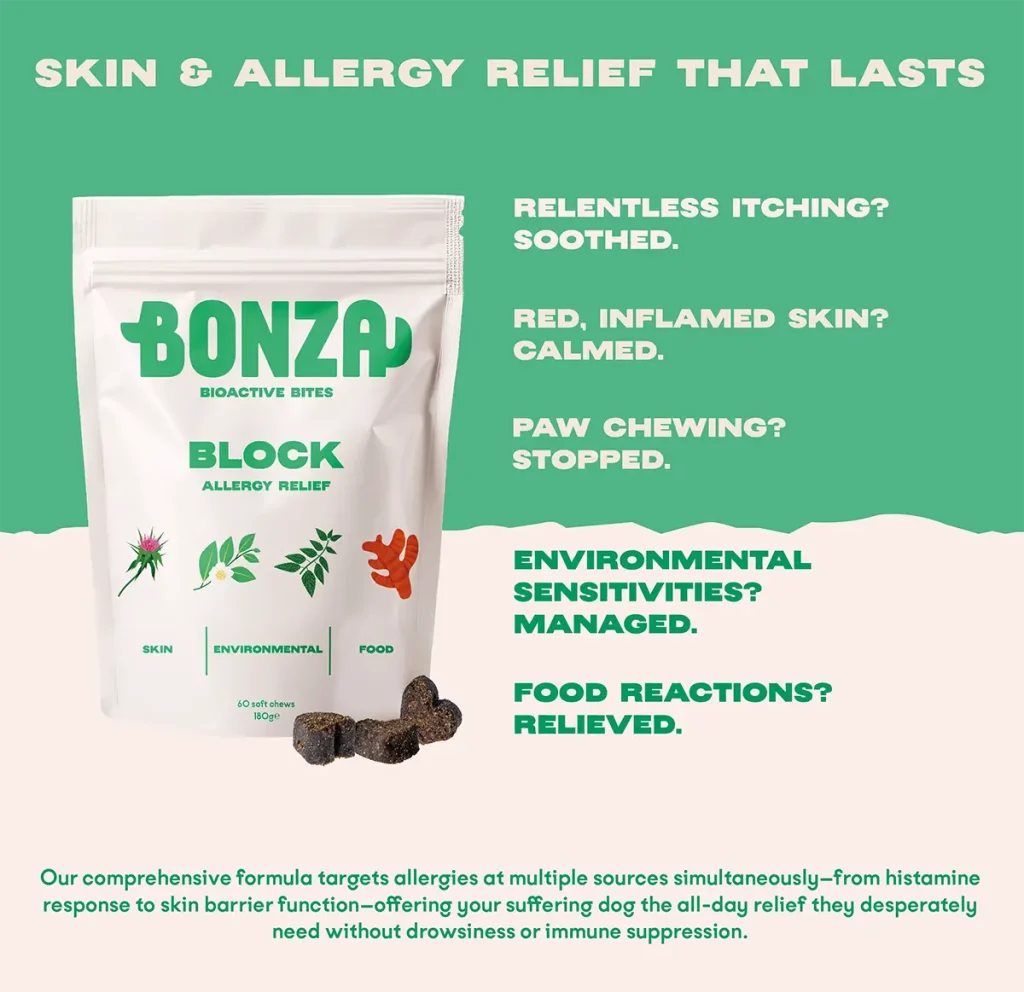
Block Bioactive Bites, next generation, scientifically formulated supplements for dogs with dermatitis, are vet-trusted soft chew supplements that combine potent natural antihistamines, skin nourishing nutrients, and immune-balancing botanicals to:
- Reduce your dog’s persistent itch – scratch cycle
- Calm allergic responses while soothing irritated, inflamed skin
- Support healthy skin barrier function and natural moisture balance
- Regulate immune reactions to common allergens without suppressing their immunity
- Strengthen resilience against environmental triggers with ongoing use
- Stabilise their system against food allergies and sensitivities
Formulated with ingredients clinically proven to target both allergies and skin health at their source, these effective chews deliver powerful relief in a form your dog will readily accept – making consistent daily treatment simple and stress-free.
Because when their scratching stops, your worrying does too.
The following article may be of interest if you would like to investigate the science that underlies the best quercetin supplement for dogs.