
 EN · English
 DE · Deutsch
 ES · Español
 FR · Français

De biotica-triade: Bonza’s driecomponentenmodel voor darmgezondheid bij honden

“Het darmmicrobioom hoeft niet één ding goed te doen. Het moet drie dingen tegelijk doen – gevoed, bevolkt en geproduceerd worden. De Biotics Triad is het raamwerk waarmee Bonza ze alle drie aanpakt.”
Samenvatting
The Biotics Triad is Bonza’s evidence-based formulation framework for canine gut health, combining prebiotics, probiotics, and postbiotics as three interdependent components of a single coordinated system. Each component operates through a distinct biological mechanism: prebiotics feed the beneficial bacteria already present in the gut; probiotics introduce and replenish live beneficial bacterial populations; postbiotics deliver the functional metabolites and bioactive compounds that are the primary molecular mediators of gut health and whole-body wellness. The scientific consensus, formalised in the International Scientific Association for Probiotics and Prebiotics (ISAPP) consensus definition of synbiotics, confirms that combining all three produces outcomes that exceed any single component alone.¹ The Biotics Triad is embedded across both Superfoods & Ancient Grains food and the Bioactive Bites supplement range, with each component represented by specific, research-backed ingredients selected on the basis of canine-validated evidence. At Bonza, the Biotics Triad is the formulation logic behind the “One Gut. Whole Dog.” philosophy — a scientific framework, not a marketing category.
Belangrijkste opmerkingen
- De Biotics Triad combineert drie componenten – prebiotica, probiotica en postbiotica – die de darmgezondheid van honden via verschillende en complementaire mechanismen aanpakken in plaats van elkaar te overlappen.
- Elk onderdeel is noodzakelijk. Prebiotica zonder probiotica laten populaties ondervoed achter. Probiotica zonder prebiotica missen het substraat om goed te gedijen. Beide zonder postbiotica laten de functionele metabolietlaag aan het toeval over.
- De ISAPP consensus bevestigt dat synbiotische combinaties beter presteren dan individuele componenten op meerdere gezondheidsuitkomsten.¹
- Bonza’s Biotics Triad maakt gebruik van met naam genoemde, door onderzoek ondersteunde ingrediënten in elke laag: Calsporin® als het levende sporenvormende probioticum; L. helveticus HA-122 en TruPet™ als de postbiotische componenten; en gedroogde cichorei, MOS en bètaglucanen als de prebiotische basis.
- De Biotics Triad is de formuleringslogica achter Superfoods & Ancient Grains en het Bioactive Bites-assortiment – het is een wetenschappelijk kader dat is gebaseerd op door honden gevalideerd bewijs, geen productkenmerk.
In deze gids:
- Samenvatting
- Belangrijkste opmerkingen
- Wat is de Biotics Triade?
- De drie componenten
- Waarom alle drie nodig zijn
- De biotica-triade in Bonza-formules
- Veelgestelde vragen
- Conclusie
- Referenties
Wat is de Biotics Triade?
The Biotics Triad is the term Bonza uses to describe its three-component approach to canine gut health support: the simultaneous provision of prebiotics, probiotics, and postbiotics as a coordinated nutritional system. The framework is grounded in the scientific understanding that gut microbiome health is not a single-variable problem. It requires substrate for beneficial bacteria to feed on, live bacterial populations to maintain and replenish the microbiome, and the functional metabolites that connect gut microbial activity to the organ systems the gut-organ axes govern.
De combinatie van prebiotica, probiotica en postbiotica wordt in de supplementenmarkt soms een tribioticum genoemd. Bonza’s Biotics Triad is de hond-specifieke uitdrukking van dit principe – een formulering op naam die is gebaseerd op bewijs dat is gevalideerd bij honden in plaats van geëxtrapoleerd uit onderzoek bij mensen, en die specifieke, met name genoemde ingrediënten in elke laag bevat die zijn geselecteerd vanwege hun door honden gevalideerde werkingsmechanismen.
The ISAPP consensus statement formally recognised that the combination of prebiotics and probiotics produces synergistic benefits exceeding either component alone.¹ The inclusion of postbiotics as a third component extends this principle further: where probiotics introduce live bacteria and prebiotics feed them, postbiotics deliver the bioactive compounds — short-chain fatty acids, surface-layer proteins, indole metabolites, and immune-signalling molecules — that are the functional currency of gut health, directly and consistently regardless of individual microbiome variability.²
De drie componenten
Prebiotica: De basis voeden
Prebiotics are non-digestible compounds, primarily fibres, that selectively stimulate the growth and activity of beneficial gut bacteria. The key word is selectively: prebiotics do not feed all bacteria indiscriminately, but preferentially support the beneficial populations associated with SCFA production, immune tolerance, and gut barrier integrity.³ The 2026 Waltham catalogue confirmed that 45.6% of the by abundance is dedicated to butyrate production — and these populations depend on fermentable prebiotic substrate to function.⁴ Without adequate prebiotic provision, even a well-populated microbiome cannot maintain the SCFA output that the gut-organ axes depend upon.
Probiotica: Het microbioom bevolken
Probiotics are live microorganisms that, when administered in adequate amounts, confer a measurable health benefit on the host.¹ In the context of the Biotics Triad, probiotics serve the replenishment function: they introduce evidence-based bacterial strains that support microbiome diversity, compete with pathogenic populations, and contribute to the gut environment in which SCFA-producing bacteria thrive. Strain specificity is critical — not all bacteria qualify as probiotics, and strain selection must be matched to canine-validated research rather than inferred from human microbiome data.⁵ The 2026 Waltham catalogue confirmed that the canine gut microbiome is fundamentally distinct from the human microbiome, with Akkermansia muciniphila — one of the most promoted species in human probiotic products — entirely absent from all canine samples, underscoring why canine-specific strain selection is a scientific necessity rather than a marketing preference.⁴
Postbiotica: De functie leveren
Postbiotica zijn preparaten van levenloze micro-organismen of hun componenten die een gezondheidsvoordeel opleveren voor de gastheer.² Ze vertegenwoordigen de derde en meest recent gekarakteriseerde laag van de biotica-triade, en in veel opzichten de meest directe: waar prebiotica en probiotica via het microbioom functionele outputs produceren, leveren postbiotica die outputs – of hun structurele equivalenten – rechtstreeks. Dit biedt twee voordelen. Ten eerste consistentie: de activiteit van postbiotica is niet afhankelijk van het overleven van levende bacteriën door de maag of een succesvolle darmkolonisatie. Ten tweede, specificiteit: bepaalde postbiotische preparaten hebben verschillende biologische activiteiten, van indoolgemedieerde arylkoolwaterstofreceptoractivering tot interacties tussen oppervlaktelaag-eiwitten en epitheliale tight junction-eiwitten, die doelbewust geselecteerd en geformuleerd kunnen worden.⁶
Waarom alle drie nodig zijn
De drie componenten van de Biotics Triade richten zich op hetzelfde uiteindelijke doel – een gezond, functioneel actief darmmicrobioom – via mechanistisch verschillende routes die elkaar niet kunnen vervangen.
Prebiotics alone cannot compensate for depleted bacterial populations; they provide substrate but not organisms. Probiotics alone, without adequate prebiotic support, face an environment that may not sustain them or allow them to produce the metabolic outputs the host depends on. Postbiotics alone deliver functional compounds but cannot rebuild a disrupted microbiome or replenish the microbial diversity that produces those compounds endogenously over time.
The scientific case for combining all three is not theoretical. Multiple canine studies confirm that synbiotic formulations — combining prebiotic and probiotic components — produce superior outcomes in gastrointestinal health, immune function, and microbiome recovery compared to either alone.⁵ The addition of postbiotics extends this further, addressing the functional metabolite layer directly and ensuring that the benefits associated with a healthy microbiome are delivered even where individual microbiome variability might otherwise limit probiotic efficacy.²
For a full explanation of the three-layer prebiotic, probiotic and postbiotic framework that underpins these recommendations, see Gut Health Supplements for Dogs: Why Probiotics Alone Are Not Enough.
De biotica-triade in Bonza-formules
De Biotics Triad is geen claim die wordt toegepast op bestaande producten – het is de formuleringslogica van waaruit Bonza’s producten zijn ontworpen. Elk product in het assortiment Bioactive Bites en Superfoods & Ancient Grains bevat de drie componenten in specifieke, door onderzoek ondersteunde ingrediënten.
Probiotic component — Calsporin® (Bacillus velezensis DSM 15544): A spore-forming probiotic with exceptional gastric survival, confirmed stability through cold extrusion processing at below 70°C, and a canine-validated evidence base for microbiome support, SCFA production, and gut barrier integrity. Calsporin® (Bacillus velezensis DSM 15544) is the only spore-forming probiotic strain with EFSA authorisation specifically for dogs.
Postbiotic component — Lactobacillus helveticus HA-122 en TruPet™: L. helveticus HA-122 is the heat-inactivated (tyndallised) postbiotic form of the same strain that exists as a live probiotic. Research confirms it retains significant biological activity through its surface-layer proteins and cell wall components, reinforcing gut barrier function, reducing mucosal inflammation, and preserving SCFA concentrations through a distinct mechanism from the live form.⁶˒⁷ TruPet™ provides an indole-rich postbiotic profile with confirmed aryl hydrocarbon receptor activation and direct gut-skin axis effects demonstrated in clinical research.⁸ Both are named components of the Biotics Triad postbiotic layer and serve complementary functions within it.
Prebiotic component — Fibrofos™ 60, baobab fruit pulp, Biolex® MB40: The prebiotic layer in the Biotics Triad is built across three structurally distinct fibre classes, each engaging different bacterial enzyme systems to feed a broader range of beneficial populations than any single prebiotic substrate can achieve.
Fibrofos™ 60 — a concentrated dried chicory root powder containing a minimum 60% inulin on product — provides fructooligosaccharides and inulin that selectively feed Bifidobacterium and SCFA-producing populations, supporting microbiome diversity and gut barrier integrity.³
Baobab fruit pulp (Adansonia digitata) operates through a distinct pectin-based mechanism. Rich in low methoxylated homogalacturonan, its structural profile is fundamentally different from fructan-based prebiotics. In an in vitro gut fermentation study, baobab fruit pulp powder at approximately half the dose of inulin produced comparable or greater propionate production alongside significant increases in acetate (+18.4 mM) and propionate (+5.5 mM), with the researchers concluding it shows “promising prebiotic potential — also in comparison with the ‘gold standard’ prebiotic inulin.”⁹
Biolex® MB40 — a refined brewers’ yeast cell wall concentrate from Leiber GmbH, delivering MOS (15–25%) and beta-1,3/1,6-glucans (25–30%) from Saccharomyces cerevisiae — addresses both prebiotic and immunomodulatory functions simultaneously. An in vitro study using canine IBD microbiota confirmed that Biolex MB40 significantly increased acetate and propionate production, elevated alpha diversity, increased Bacteroidetes and Firmicutes abundance, demonstrated protective effects on gut epithelial barrier integrity, and significantly increased the anti-inflammatory cytokine IL-10 across all donors tested.¹⁰ The MOS fraction binds to pathogenic bacterial fimbriae to prevent gut wall attachment, while the beta-glucan fraction activates immune cells through the Dectin-1 receptor pathway and supports gut-associated lymphoid tissue (GALT).
Veelgestelde vragen
Een synbioticum is de formeel gedefinieerde combinatie van prebiotica en probiotica. De biotica-triade breidt dit uit met postbiotica als derde component, wat het completere begrip van de functie van het darmmicrobioom weerspiegelt dat de postbiotische wetenschap biedt. Het is een synbioticum plus de functionele metabolietlaag die direct wordt geleverd en niet alleen endogeen wordt geproduceerd.
L. helveticus HA-122 en TruPet™ werken via verschillende postbiotische mechanismen. HA-122 werkt via interacties tussen oppervlaktelaag-eiwitten en darmepitheelweefsel, waardoor de fysieke darmbarrière wordt versterkt en slijmvliesontsteking wordt verminderd. TruPet™ levert indoolmetabolieten die de arylkoolwaterstofreceptor activeren, waardoor microbiële activiteit in de darmen wordt gekoppeld aan immuunreacties van de huid via de darm-huidas. Dit zijn eerder complementaire dan redundante functies binnen dezelfde postbiotische laag.
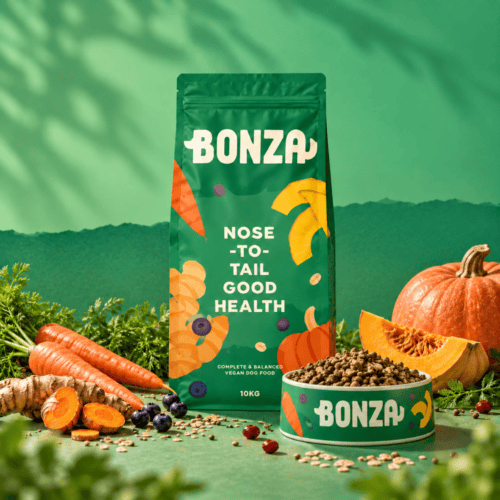
De Biotics Triad is ingebed in zowel Superfoods & Ancient Grains als in het assortiment Bioactive Bites, waarbij de specifieke concentraties van elk onderdeel variëren per product en gezondheidsdoelstelling. Biotics Bioactive Bites levert de meest geconcentreerde expressie van de volledige Triad, met alle drie de componenten in therapeutische concentraties. Superfoods & Ancient Grains biedt dagelijkse basisondersteuning voor de Biotics Triad door dezelfde ingrediëntencategorieën op onderhoudsniveau.
Yes, and this is the intended use. The food provides the daily prebiotic fibre diversity and baseline Biotics Triad foundation; Biotics Bioactive Bites adds concentrated targeted support. The two products address different depths of the same framework rather than duplicating it.
Conclusie
The Biotics Triad is the answer to a question the canine gut health supplement market has largely avoided asking: not “which of these three things should my dog have,” but “how do all three work together as a system, and what does a formulation look like that takes all three seriously simultaneously?” The scientific evidence is unambiguous that the combination outperforms the components in isolation. The remaining question is whether the specific ingredients selected at each layer are validated, canine-appropriate, and mechanistically understood. At Bonza, that question is the formulation brief — and the Biotics Triad is the answer to it.
Referenties
- Swanson KS, Gibson GR, Hutkins R, Reimer RA, Reid G, Verbeke K, Scott KP, Holscher HD, Azad MB, Delzenne NM, Sanders ME. De consensusverklaring van de International Scientific Association for Probiotics and Prebiotics (ISAPP) over de definitie en reikwijdte van synbiotica. Nat Rev Gastroenterol Hepatol. 2020;17(11):687-701. doi: 10.1038/s41575-020-0344-2. PMID: 32826966. PMC: PMC7581511.
- Salminen S, Collado MC, Endo A, Hill C, Lebeer S, Quigley EMM, Sanders ME, Shamir R, Swann JR, Szajewska H, Vinderola G. The International Scientific Association of Probiotics and Prebiotics (ISAPP) consensus statement on the definition and scope of postbiotics. Nat Rev Gastroenterol Hepatol. 2021;18(9):649-667. doi: 10.1038/s41575-021-00440-6. PMID: 33948025. PMC: PMC8387231.
- Wernimont SM, Radosevich J, Jackson MI, Ephraim E, Badri DV, MacLeay JM, Jewell DE, Suchodolski JS. De effecten van voeding op het gastro-intestinale microbioom van katten en honden: invloed op gezondheid en ziekte. Front Microbiol. 2020;11:1266. doi: 10.3389/fmicb.2020.01266. PMID: 32670224. PMC: PMC7329990.
- Castillo-Fernandez J, Gilroy R, Jones RB, Honaker RW, Whittle MJ, Watson P, Amos GCA. Waltham catalogue for the canine gut microbiome: a complete taxonomic and functional catalogue of the canine gut microbiome through novel metagenomic based genome discovery. Microbioom. 2026;14(1):25. doi: 10.1186/s40168-025-02265-w. PMID: 41547860. PMC: PMC12811905.
- Pilla R, Suchodolski JS. De rol van het darmmicrobioom en metaboloom van honden bij gezondheid en gastro-intestinale ziekten. Front Vet Sci. 2020;6:498. doi: 10.3389/fvets.2019.00498. PMID: 31993446. PMC: PMC6971114.
- Deschamps, C., Humbert, D., Brun, M., Denis, S., Durif, C., Apper, E., & Blanquet-Diot, S. (2025). Lactobacillus helveticus-afgeleid postbioticum en levende Saccharomyces boulardii herstellen darmmicrobiota na antibiotische verstoring in een in vitro darmmodel voor honden. Beneficial Microbes, 17(2), 191-211. https://doi.org/10.1163/18762891-bja00088
- Rawling M, Schiavone M, Mugnier A, Leclercq E, Merrifield D, Foey A, Apper E. Modulation of zebrafish (Danio rerio) intestinal mucosal barrier function fed different postbiotics and a probiotic from Lactobacilli. Micro-organismen. 2023;11(12):2900. doi: 10.3390/microorganisms11122900. PMID: 38138044. PMC: PMC10745996.
- Sordillo A, Heldrich J, Turcotte R, Sheth RU. Een indoolrijk postbioticum vermindert jeuk bij honden: een gerandomiseerde, dubbelblinde placebogecontroleerde studie. Dieren. 2025;15(14):2019. doi: 10.3390/ani15142019. PMID: 40723482. PMC: PMC12291873.
- Foltz M, Zahradnik AC, Van den Abbeele P, Ghyselinck J, Marzorati M. Een pectinerijk baobabvruchtenpulppoeder oefent in vitro een prebiotisch potentieel uit op het humane darmmicrobioom. Micro-organismen. 2021;9(9):1981. doi: 10.3390/microorganisms9091981. PMID: 34576876. PMC: PMC8467054.
- Ghyselinck J, Verstrepen L, Rakebrandt M, Marynissen S, Daminet S, Marzorati M. In vitro fermentatie van gistcelwanden (mannan-oligosaccharide) en gezuiverde β-glucanen moduleert de colonmicrobiota van honden met inflammatoire darmziekten en toont beschermende effecten op barrière-integriteit en ontstekingsremmende eigenschappen. PLoS One. 2025 May 13;20(5):e0322877. doi: 10.1371/journal.pone.0322877. PMID: 40359204.
Redactionele informatie
| Veld | Detail |
|---|---|
| Gepubliceerd | Maart 2026 |
| Laatst bijgewerkt | Maart 2026 |
| Beoordeeld door | Veterinary Advisory Board |
| Volgende beoordeling | Maart 2027 |
| Auteur | Glendon Lloyd, Dip. Kynologische Voeding (Dist.), Dip. Dog Nutrigenomics (Dist.), Oprichter, Bonza |
| Disclaimer | Dit artikel dient alleen ter informatie en is geen veterinair advies. Raadpleeg altijd een gekwalificeerde dierenarts voordat u wijzigingen aanbrengt in het dieet of de supplementen van uw hond. |